
Coffee is one of the world’s most popular commodities. As of August 2024, the export of Indian coffee was valued at $1.19 billion, with a growth of 45 per cent year-on-year over the corresponding period in 2023. Higher exports are driven by prices and increased demand for instant coffee, especially from countries such as Russia and Turkey.
With this evident growth, the Indian coffee industry today faces several environmental challenges concerning its water usage, by-product management, and greenhouse gas emissions. During coffee production, the water footprint is approximately 140 litres for a single cup of branded coffee and 20,000 litres for a kg of coffee. Some of its by-products, one of the main concerns about the sustainability of the coffee production chain, comprise more than 10 million tonnes of agricultural coffee residue, along with large amounts of wasted water and crop residues.
Under-utilised product
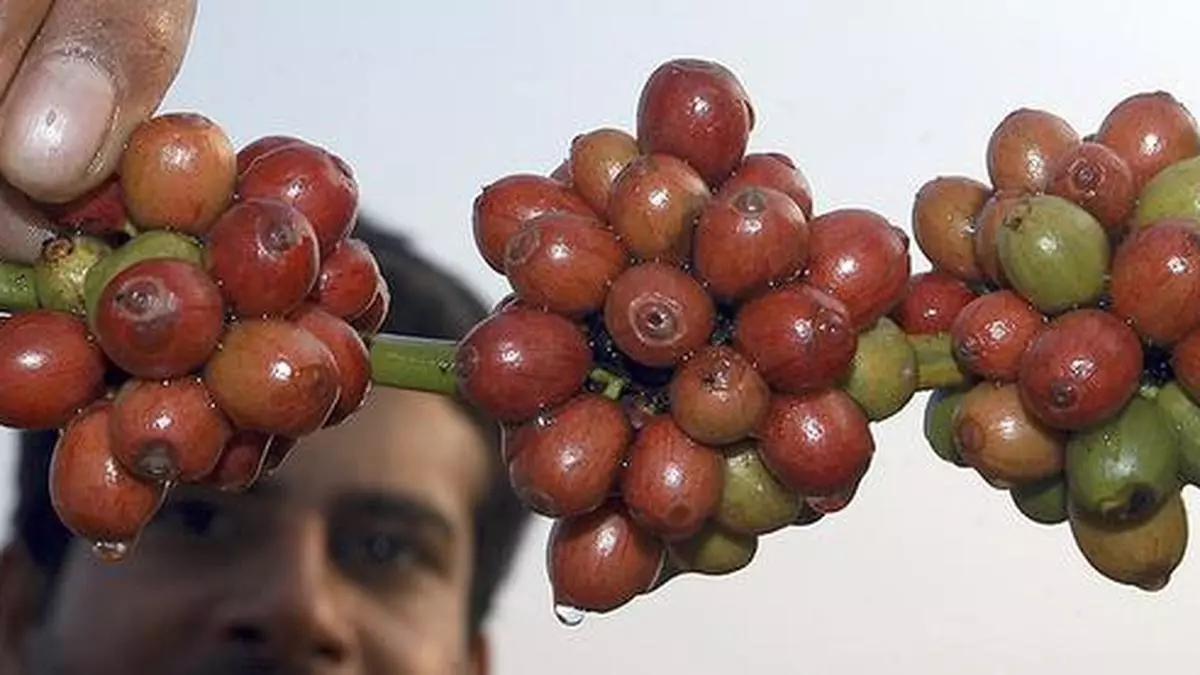
Interestingly, the coffee pulp generated from processing is one of the major underutilised by-products at the farm level. In uncovering its full potential, the problem is compounded due to the large volumes produced in diluted forms, which makes it expensive to reuse. Moreover, the significant water usage involved in coffee production can be reduced with the help of effective treatment of coffee pulping wastewater. As the demand for coffee continues to increase worldwide, numerous producers are experiencing pressures to maintain profitability. Given this scenario, the effective management of coffee pulping wastewater is vital to contributing to the income of coffee growers.
However, the current technologies put into practice cannot recover water and other important resources from effluents. Over time, these effluents end up infiltrating the soil and changing its composition, thus reducing the net yield and destruction of the river ecosystem, the emission of greenhouse gases, and eutrophication. Furthermore, the pollutants present in the coffee processing wasted water also cause the pH of the water in the environment to change increasing oxidation- reduction potential (ORP) leading to complex organic compounds turning into carcinogens, resulting in an imbalance and a difference in the properties of the water. It further impacts the lives of animals and plants in that water environment.
Zero liquid discharge
To address this fundamental ecological issue, there is an urgent need to cater to water usage and waste disposal in coffee production, which can further contribute to promoting a circular economy. Disruptive and advanced innovation in this domain can reduce water requirements and costs, treat water at large capacity and help achieve zero liquid discharge in compliance with government regulations. Such a breakthrough can pave the way for the future of water recovery by treating pulp effluent holistically.
For regaining water from the toughest effluents, principles of Fine Particle Shortwave Dissociation are used. With the help of this, compounds dissolved in the effluent, when subjected to relevant Specific Frequency of Dissociation (SFODs), dissociate their elemental states. This water with suspended particles is subjected to free fall conditions, when the particles agglomerate under the influence of Van der Walls forces in a negative gravity state and can be removed as sludge. Clean water can thus be recovered from the effluent using the facilitated Osmotic Diffusion (RFOD) technique, similar to nutrient absorption in human bodies.
The clean water thus generated by implementing these technologies can be reused without using chemical reactions, biological processes, Reverse Osmosis (RO) or Evaporators. You throw nothing out of your plantation.
By implementing such principles, the process of water purification can be enhanced in an eco-friendly way. These advanced technologies can lead to a sustainable world, reducing footprint and promoting resource replenishment for a circular economy. Ultimately, recovering the utility of coffee pulp and water along with lessening its environmental impact can offer agricultural and economic benefits to coffee growers and coffee lovers.
The author is Chairman of Organisation De Scalene Foundation